


Ever walked into your laundry room expecting clean clothes, only to see a mysterious warning? A samsung washer 4c code can make a simple task a big problem. It usually means your washer can’t get the water it needs for a cycle.
Understanding the root cause is key to solving the issue. Most problems, like a kinked hose or a clogged filter, are simple to fix at home. You don’t always need a pricey technician to fix your washer.
This guide offers a systematic approach to fixing your washer. By following these steps, you can get your machine working again. Let’s explore the solutions to clear that samsung washer 4c code for good.
Key Takeaways
- Identify common water supply blockages quickly.
- Learn how to inspect inlet hoses for kinks or damage.
- Discover the proper way to clean inlet filters.
- Save money by performing simple repairs yourself.
- Restore your appliance to peak performance in 2026.
Understanding the Samsung Washer 4C Code
The samsung washer 4c code on your screen is a warning. It means your washer can’t get enough water. This is not just a glitch; it’s a serious alert from the washer’s computer.
When the sensors see the water level is low, the washer stops. This is to protect itself from damage. It keeps the washer safe from drying out during washing or rinsing.
What the 4C Error Means for Your Appliance
The samsung washer 4c code shows a problem with water supply. Your washer needs constant, high-pressure water to work right. This is true for every step of washing clothes.
If water flow is bad or stops, the control board can’t check if the tub is filling. So, the washer goes into safety mode. This stops your laundry until the problem is fixed.
Common Causes Behind Water Supply Failures
Many things can cause this error. It could be something simple or a bigger mechanical problem. Finding the cause is key to fixing your washer.
Some common problems include:
- Clogged inlet screens: Dirt or minerals can block the water filters.
- Low household water pressure: Weak water pressure at home might not give the washer enough water.
- Damaged or kinked supply hoses: Hoses with problems can stop water from getting to the valve.
- Faulty inlet valve: A broken valve can stop water flow completely.
By looking at these areas, you might fix the samsung washer 4c code yourself. Knowing these basics helps you tackle problems with confidence.
Safety Precautions Before You Begin Repairs
When you see a samsung washing machine error code 4c, safety first is key. Make sure the area is safe before you start to avoid electrical shock or water damage.
“Safety is not just a slogan; it is a way of life that protects you and your home during every repair task.”
Getting ready right helps you focus on fixing the issue without fear of danger. By setting up a safe space, you reduce risks as you find out what’s wrong.
Disconnecting Power and Water Supplies
First, turn off the power. Unplug the washer from the wall to make sure it’s safe.
Then, find the water valves behind the washer. Turn them clockwise to stop water flow. This is very important when fixing a samsung washing machine error code 4c.
Essential Tools for Troubleshooting Your Samsung Washer
Having the right tools makes fixing your washer easier and faster. Here’s what you need before you start:
- Multimeter: Needed for checking electrical connections in valves and sensors.
- Pliers: Good for loosening hose clamps or removing stuck debris.
- Bucket: Important for catching water when you remove the supply hoses.
- Screwdriver set: Needed to open the washer’s internal panels.
Using these tools right helps you figure out why your samsung washing machine error code 4c keeps showing up. Keep your workspace tidy to avoid losing small parts during the fix.
Inspecting Your Home Water Supply Lines
External factors often cause the samsung washing machine error code 4c. Start by checking your home plumbing. Make sure water can reach the machine without blockages. A quick look can save you time and money.
Checking for Kinked or Damaged Hoses
First, pull your washer away from the wall to see the back. Look at the hot and cold water hoses for sharp bends, kinks, or damage.
If a hose is bent or damaged, fix it to improve water flow. Make sure the connections are tight and there’s no leaking or bulging. This could mean the hose is failing.
Verifying Water Pressure at the Faucet
Maybe the issue is your home’s water pressure. If you see the samsung washing machine error code 4c, remove the hoses from the washer. Put them in a bucket.
Turn on the faucets to see how water flows. You should see a strong, steady stream from both hoses. If the water flows slowly, the problem is with your plumbing, not the samsung washing machine error code 4c.
Cleaning the Inlet Valve Filters

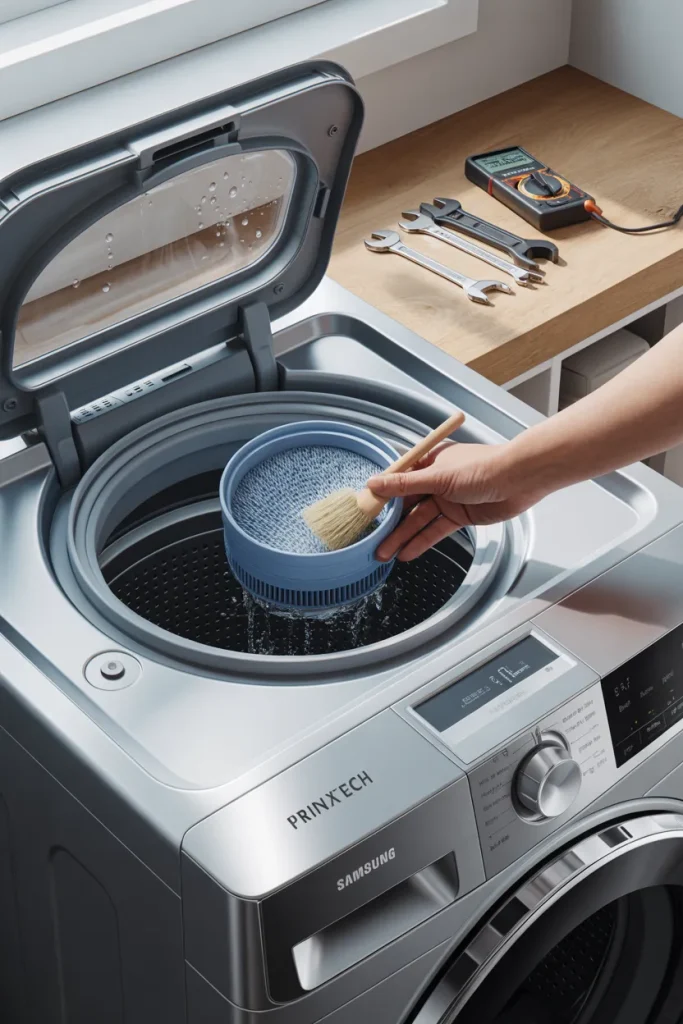
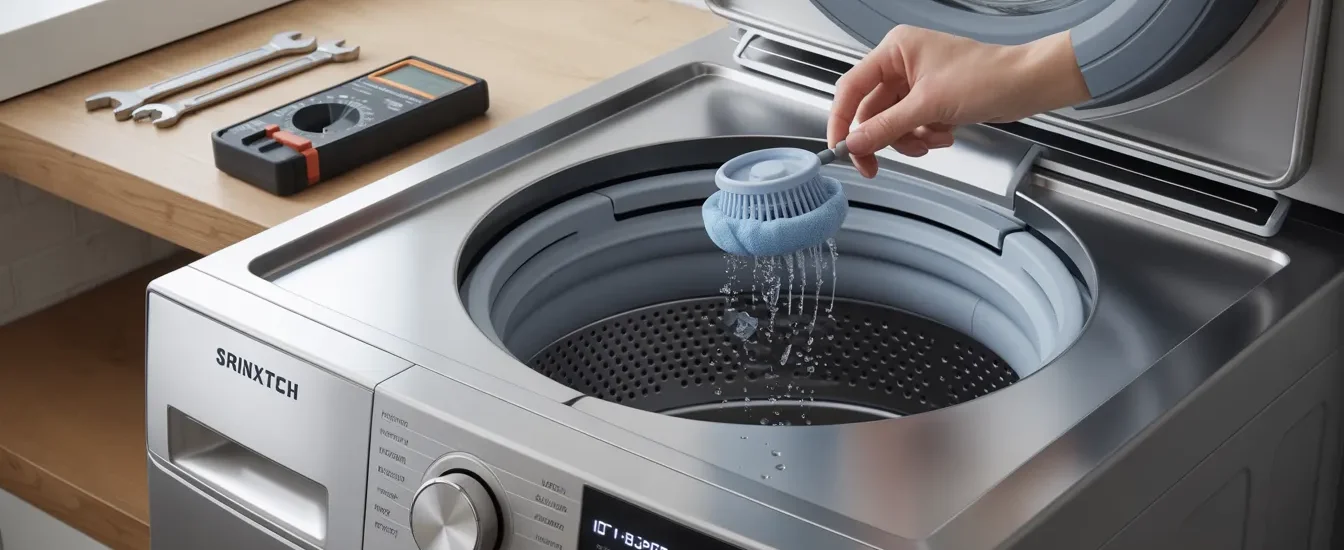
If you want to troubleshoot Samsung washer 4C error codes, check the inlet valve filters first. These small mesh screens can get clogged with mineral deposits and debris. This blockage can stop water from flowing, causing the machine to think there’s a supply failure.
Keeping these filters clean is key to avoiding water supply problems. Clear filters mean your washer gets the water pressure it needs for every cycle.
Locating the Water Inlet Valve
The water inlet valve is at the washer’s rear, where the hot and cold hoses connect. You’ll see two threaded ports for the hoses. These ports have mesh filters that control water flow into the drum.
Step-by-Step Guide to Removing and Cleaning Mesh Filters
First, turn off the water supply faucets. Have a bucket or towel ready to catch any water left in the hoses. Here’s how to effectively clean the filters and fix Samsung washer 4C error:
- Disconnect the hoses: Unscrew the water supply hoses from the washer’s back by turning them counter-clockwise.
- Remove the filters: Use needle-nose pliers to pull out the small plastic mesh filters from the inlet ports.
- Clean the debris: Rinse the filters under running water to remove sediment, rust, or minerals. Use a soft-bristled brush for tough spots.
- Inspect and reinstall: Before putting the filters back, check for any damage or tears.
- Reconnect hoses: Screw the hoses back onto the inlet valves, making sure they’re tight to avoid leaks.
After reconnecting the hoses, turn the water supply back on. Check for moisture around the connections. A quick rinse cycle will show if water is flowing well again.
Testing the Water Inlet Valve for Functionality
If your washer won’t fill after clearing the mesh filters, it’s time to check the inside parts. A 4C error often means a problem with the water intake system. To fix this, you need to see if the inlet valve is working right.
Signs of a Faulty Inlet Valve
The water inlet valve controls water flow into your washer. If it breaks, you might hear a loud humming noise from the back. This is a sign of a problem.
Or, the washer might not make any sound and just show the error code. This means the solenoid coils in the valve aren’t working. If you start a cycle but hear no water, the valve is likely broken.
Using a Multimeter to Check for Continuity
To find out if the valve is the issue, use a multimeter on the solenoid coils. First, unplug the washer for safety. Then, take off the top or rear panel to get to the valve.
Set your multimeter to Ohms (Ω) to check resistance. Place the probes on each solenoid coil’s terminals. A good coil should show a reading of 500 to 1500 ohms, depending on your model. If it shows an infinite reading or no continuity, the coil is bad and needs to be replaced.
Troubleshooting the Samsung Washer 4C Code via Control Board Diagnostics
If you’re facing a tough error, the service mode can help. Samsung washers have advanced tools for deep checks. This samsung washer 4c code fix method is key when other parts seem fine but the error sticks.
Accessing the Service Mode on Modern Samsung Models
To get into the service menu, press certain buttons while it’s on. The exact steps differ by model, but often involve the Delay End and Super Speed buttons together for a few seconds. When the display starts flashing, you can explore the menu and run tests.
These tests check the water inlet valves and pressure sensors. If a failure is found, a new error code might pop up. This info is critical for fixing the samsung washer 4c code right, as it tells if it’s an electrical or mechanical problem.
“Precision in diagnostics is the bridge between a temporary patch and a permanent solution for complex mechanical failures.”
Interpreting Diagnostic Codes Beyond 4C
In the service menu, you might see codes that give more insight than the usual 4C alert. For example, certain codes might show if the control board can’t send a signal to the inlet valve. Knowing this helps figure out if you need to replace a sensor or if the main board needs a pro’s touch.
Always write down the codes you see before fixing anything. By matching these with your user manual, you can make sure your samsung washer 4c code fix is on point. This method saves time and avoids replacing parts unnecessarily.
Checking the Pressure Sensor and Hose
When you’re dealing with water supply errors, check the pressure sensor system. This part, known as a pressure switch, controls the water level in your tub. If it doesn’t talk right to the control board, your washer might show a samsung washer 4c code fix error, even if the water is fine.
Identifying the Water Level Sensor
To find the sensor, take off the top panel of your washer. Look for a small, round plastic part near the top corner. It has a thin, clear tube attached to it.
This sensor is critical for your washer to work right. If it’s damaged or the electrical connector is loose, your washer can’t tell if the tub is filling up. Check the wiring for fraying or oxidation.
Inspecting the Pressure Tube for Blockages or Leaks
The clear tube must stay airtight to work right. If it’s pinched, cracked, or clogged, air pressure won’t reach the sensor. This causes wrong readings and stops the cycle.
Here’s how to keep the system clear:
- Detach the tube from the sensor and the tub port.
- Look for moisture, mold, or mineral buildup that blocks airflow.
- Check the whole tube for small holes or cracks.
- Make sure the connections at both ends are tight.
If you find debris, blow through the tube to clear it. A clean, airtight tube fixes the samsung washer 4c code fix issue and lets your water system talk to the control board again.
Evaluating the Wiring Harness and Electrical Connections

Vibration during high-speed spin cycles can cause hidden electrical problems in your washing machine. Over time, these movements can loosen connectors or fray wires. This disrupts the signals to the water inlet valve. A good samsung washing machine 4c error solution needs a detailed check of these parts.
Identifying Loose or Corroded Connectors
Begin by removing the top or back panel of your washer to see the wiring harness. Look closely at each plastic connector for discoloration, melting, or oxidation. A greenish or white powdery substance on metal pins means corrosion.
Check if wires near the connectors feel loose or detached. A terminal that’s not seated right can cause communication failures. Always ensure the power is completely disconnected before touching any electrical parts to avoid shock.
Repairing Damaged Wiring Within the Washer Cabinet
If you find a wire pinched or frayed by the cabinet, fix it right away. You can use high-quality electrical tape or heat-shrink tubing for minor damage. For bigger breaks, you might need to add a new connector.
After fixing the connections, make sure all wires are away from sharp edges or moving parts. Good cable management is key to any samsung washing machine 4c error solution. Securing these connections keeps your appliance working well and stops future signal problems during wash cycles.
Addressing Water Supply Issues in Cold Weather
When it gets cold, your laundry might stop working. In cold places, the 4C error often happens because of frozen water lines or hoses. To fix this, you need to know how ice affects your plumbing.
Preventing Frozen Pipes and Hoses
To keep your washer working in winter, prevent ice from forming. Make sure the area around your laundry room stays warm. If your washer is in an unheated garage or basement, add insulation to the water lines.
Use foam pipe insulation sleeves to protect against cold. Also, keep the laundry room door open to let warm air in. These steps help avoid frozen hoses.
“An ounce of prevention is worth a pound of cure, when protecting your home from winter.”
Thawing Procedures for Your Washing Machine
If ice blocks your hoses, thaw them carefully to avoid damage. Don’t use an open flame or high-heat tools, as they can harm your washer. Instead, use a gentle method to safely thaw the ice.
First, turn off the water supply and remove the hoses from the washer. Place the hoses in warm water or use a hair dryer on a low-heat setting to thaw them slowly. Be patient to avoid damaging the internal valves.
After the hoses thaw, reconnect them carefully and check for leaks. This care in winter can prevent costly repairs and keep your washer working well.
Verifying the Main Control Board Integrity
If you’ve checked the water supply and it’s fine, it’s time to look at the main control board. This part is like the brain of your washer, controlling everything. If it breaks, you might see a 4C error, even with no water issues.
Symptoms of a Failed Main Control Board
Spotting a bad control board means looking for more than just water problems. You might see erratic behavior or parts that don’t work right during troubleshooting.
Here are some signs of a failing board:
- Unresponsive buttons or a display that flickers.
- The washer starts a cycle but stops suddenly without reason.
- Error codes that don’t match what’s happening with the washer.
- Strange clicking sounds from the control panel area.
When to Consider Professional Repair Services
Fixing the main control board is tricky and should be left to experts. Trying to fix it yourself can cause more harm or even be dangerous.
Call a pro if:
- You’ve checked everything else and the error won’t go away.
- The control board has burnt circuitry or corrosion.
- You don’t have the right tools for safe electronic checks.
- Your washer is under warranty.
Professional help makes sure the problem is found right and parts are the real deal. Getting an expert avoids the hassle of wrong fixes and keeps your washer working right.
Resetting Your Samsung Washing Machine
A simple reset is often the last step in fixing samsung washer error code 4c. Even after fixing water supply issues, the control board might keep old fault data. A reset clears this data, letting your washer work right again.
Performing a Hard Power Reset
A hard power reset is the best way to reboot the control board. It drains electricity in capacitors, fixing small software issues that cause errors.
To do a proper power cycle, follow these steps:
- Unplug the power cord from the wall outlet completely.
- Wait for at least 5 to 10 minutes to ensure all internal components are fully discharged.
- Plug the machine back into the power source and turn it on.
Clearing Error Codes from the Memory
After power is restored, check if the system cleared the fault. If the display is blank or shows a normal cycle time, your samsung washer error code 4c troubleshooting worked.
If the error code shows up again right after a reset, there might be a physical issue. But usually, this quick reset gives your washer a fresh start. Make sure water supply valves are fully open before starting a test load after the reset.
Preventative Maintenance to Avoid Future 4C Errors
Regular upkeep is the best way to stop the samsung 4c code on washing machine from showing up. By spending a little time on your appliance, you can dodge the hassle of sudden breakdowns and expensive fixes.
Routine Cleaning of Hoses and Filters
Mineral deposits and debris can build up in the inlet filters over time, blocking water flow. You should check these mesh screens every six months to keep them free of sediment. Cleaning these filters is a simple task that helps your machine draw water without trouble.
Also, look for signs of wear on your supply hoses, like cracking or bulging. If you see any damage, replace the hoses right away to avoid leaks or sudden bursts. Being proactive keeps your machine running smoothly for years.
Best Practices for Water Pressure Management
Your washer needs consistent water pressure to work right. If your home pressure is too high, it can harm internal parts and cause the samsung 4c code on washing machine. Installing a pressure regulator can keep your water supply in the right range.
Don’t turn the water faucets on and off too quickly, as this can cause pressure spikes. Keeping the water flow steady and controlled protects the inlet valves and sensors from extra stress. Use the following schedule to keep your appliance in top shape.
| Maintenance Task | Frequency | Benefit |
|---|---|---|
| Clean Inlet Filters | Every 6 Months | Prevents Flow Blockages |
| Inspect Supply Hoses | Every 12 Months | Avoids Leaks and Bursts |
| Check Water Pressure | Annually | Protects Internal Valves |
| Wipe Door Gasket | Monthly | Prevents Mold and Odors |
When to Call a Professional Technician
Sometimes, the samsung 4c code on washing machine shows a problem that needs a pro. While you can fix some small issues at home, some big mechanical problems need special tools and skills. Knowing your limits is key to taking care of your appliance right.
Recognizing Complex Mechanical Failures
If you’ve checked the hoses and cleaned the filters but the error code stays, it might be a bigger issue. Problems like internal pump failures or complex control board issues need a technician. They have the right tools and training to fix it safely.
Keep in mind, if you see electrical faults or error codes keep coming back, it’s a sign of a bigger problem. If you smell burning or hear strange noises during water intake, stop the machine right away. These signs mean your washer’s mechanical parts are failing.
Warranty Considerations and Authorized Service Providers
Before you start any big repairs, check if your warranty is active. Many makers will void your warranty if you fix internal parts yourself. Check your owner’s manual or the official website to see if your appliance is covered.
If you decide you need a pro, pick an authorized service provider. They have the right parts and tools for your model. Using an authorized service ensures your samsung 4c code on washing machine is fixed right, protecting your investment for the long run.
Conclusion
Fixing home repairs yourself saves time and money. You now know how to tackle common water issues in your Samsung washer.
Knowing how to fix a Samsung washer 4c error makes fixing it easy. You can now tackle these problems with confidence and the right tools.
Regular maintenance keeps your washer running smoothly. By checking hoses and cleaning filters, you avoid future problems. You’re ready to do these tasks on your own.
Share your repair experiences with others. Your feedback helps us make our guides better for everyone. By mastering Samsung washer 4c error fixes, your home stays efficient all year.
FAQ
What does the samsung washing machine error code 4c actually mean for my appliance?
The samsung washer 4c code means your machine has found a water supply problem. The sensors inside the washer say water isn’t coming in fast enough. This is to keep the pump and motor from getting damaged.
How can I quickly troubleshoot samsung washer 4c error issues without calling a technician?
Start by checking the water connections. Make sure the faucets are fully open and the hoses aren’t kinked. Sometimes, just fixing a hose or opening a valve can solve the problem.
What is the most common samsung washer 4c code fix for older machines?
Cleaning the water inlet mesh filters is often the fix. Sediment and minerals can block these filters. Use pliers to remove and rinse them to fix the flow.
How do I know if I need to resolve samsung washer 4c error by replacing the inlet valve?
If cleaning the filters and checking the hoses doesn’t work, you might need to replace the inlet valve. Use a multimeter to check the solenoids. If they don’t work or make noise without water, the valve needs to be replaced.
Can a software glitch cause a samsung 4c code on washing machine displays?
Yes, sometimes a glitch can cause the 4c code. Try a hard power reset by unplugging the washer for 10 minutes. This clears the error memory and might fix the problem.
What role does the pressure sensor play in samsung washer error code 4c troubleshooting?
The pressure sensor is key in troubleshooting. Check it and its tube for blockages or air leaks. If it’s blocked, the sensor can’t tell the control board the washer is filling. This causes the 4C error.
Are there preventative steps I can take to avoid a water supply failure in the future?
Yes, regular maintenance helps. Check hoses, clean filters, and ensure water pressure is right. This keeps your washer working well.
When should I stop the DIY repair and contact an authorized service provider?
If you’ve checked everything and the problem persists, it might be the control board. This is complex and best left to a pro. They can fix it without damaging your washer or voiding the warranty.