
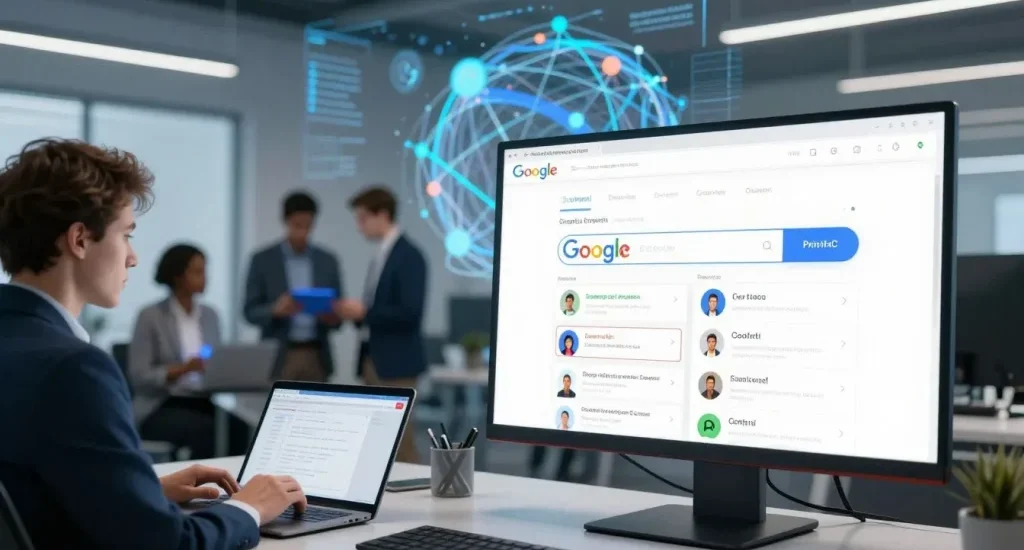
Did you know over 8.5 billion queries go through Google every day? This huge amount of data shapes our digital world constantly. To really understand what is google, you need to see it as more than just a search bar.
Google has grown from a simple index to a sophisticated AI-driven ecosystem. It now guesses what you want and gives you answers before you finish typing. This change is rewriting how we use the internet.

Exploring today’s digital world can be tough without the right tools. This guide will teach you the basics of current search technology. Learning these skills will give you a significant advantage in finding the right information fast.
Key Takeaways
- The platform processes billions of daily requests to organize global information.
- Artificial intelligence now plays a central role in ranking and delivering results.
- Search behavior has shifted from keyword matching to intent-based discovery.
- Modern tools prioritize user experience and contextual relevance above all else.
- Mastering these systems helps you retrieve better data in less time.
Defining the Modern Google Ecosystem
When you ask what is Google, you’re really asking about a huge system. It’s not just a search engine anymore. It’s a dynamic, interconnected web of services that makes your digital life easier. It connects hardware, software, and cloud computing, so your data is always with you.
This ecosystem works together seamlessly. Whether you’re using an Android phone, browsing with Chrome, or working in the cloud, everything works together. Knowing what is Google helps you use these tools to get more done in your personal and work life.
The following table shows the main parts of this big digital world:
| Component | Primary Function | User Benefit |
|---|---|---|
| Android OS | Mobile platform | Seamless device integration |
| Google Cloud | Infrastructure | Scalable data storage |
| Workspace | Collaboration | Real-time team productivity |
| Search Engine | Information retrieval | Instant access to knowledge |
Using these connected services makes your workflow more efficient. Each part supports the others, making it easy to switch between tasks. By using this ecosystem, you can stay organized and handle the internet’s complexity.
The History and Evolution of Google
Two Stanford students started a company that changed the digital world. To understand what is Google today, we must go back to 1998. Larry Page and Sergey Brin, the google founders, wanted to organize the world’s information for everyone.
Their early work created a unique algorithm for ranking pages. This innovation changed the internet, moving beyond simple keyword searches. The history of Google is a story of constant improvement and ambition.
As Google grew, it became more than a search engine. The vision of the google founders helped it grow fast while keeping high standards. Looking at the history of Google helps us understand its precision today.
Today, what is Google is a global tech leader. It shapes how we research and how businesses connect with customers. Here are some key moments that shaped Google’s journey.
| Year | Milestone | Impact |
|---|---|---|
| 1998 | Official Incorporation | Search engine launch |
| 2004 | Public Offer | Market expansion |
| 2015 | Alphabet Restructuring | Diversified innovation |
| 2023 | AI Integration | Generative search era |
Understanding the Core Architecture of Google Search
The google search engine has a complex technical backbone. It’s a huge network that handles billions of searches daily. It’s the main way we find information online, giving us answers quickly.
The system uses advanced algorithms and data structures. These work together to make the internet searchable. It uses distributed computing to handle big data without losing speed or accuracy.
The google search engine focuses on being efficient. Its code is always being improved to keep it scalable and reliable. This lets it keep up with new content and user habits.
It’s all about relevance for the google search engine. It looks at web patterns to find the best answers for users. It uses ranking models to check thousands of factors in real-time.
The google search engine connects our curiosity with digital knowledge. Its strong design keeps the web experience fast and accurate. This foundation makes finding information online possible worldwide.
How Google Crawls and Indexes the Web
The google search engine works through a complex process. It uses special software called crawlers or spiders to explore the internet. These bots move from one page to another, mapping the web’s connections.
When a page is found, the system checks if it’s worth keeping. This is the start of indexing. The content is analyzed, sorted, and stored in a huge database. This makes it quick to find when you search.
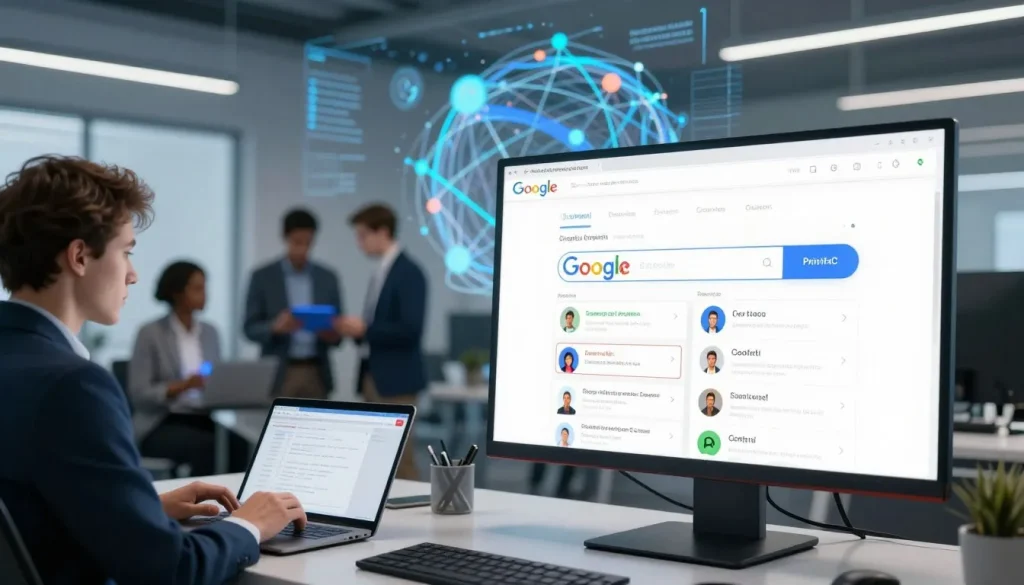
Keeping such a detailed index is a big task. The google search engine regularly checks pages for updates. This keeps the information you see current and correct.
Let’s look at how crawling and indexing work together:
| Process Phase | Primary Action | System Goal |
|---|---|---|
| Crawling | Discovery of URLs | Mapping the web structure |
| Indexing | Content analysis | Organizing data for retrieval |
| Maintenance | Periodic re-visiting | Updating the google search engine |
This system is key to how we find information today. It organizes the internet, making it easy to find what you need. It shows the engineering needed to keep our digital world connected and searchable.
The Role of AI and Machine Learning in Ranking
Every time you type something, a smart AI system tries to understand what you mean. The google search engine has grown beyond just matching keywords. It now gets the real meaning behind your words, not just the exact words.
Now, machine learning looks at lots of data to guess what you need to know. It checks how people act and what content is good. This way, the google search engine gives you answers that feel made just for you. It’s great for when you ask broad or casual questions.
The table below shows how old search methods differ from today’s AI-driven ones:
| Feature | Traditional Search | AI-Driven Search |
|---|---|---|
| Primary Focus | Keyword Matching | User Intent |
| Contextual Awareness | Limited | High |
| Result Personalization | Static | Dynamic |
| System Capability | Basic Indexing | Semantic Understanding |
These changes make the google search engine easier to use for everyone. It focuses on meaning over just words. This keeps improving how we search the web every day.
What is Google Search Generative Experience
The Search Generative Experience changes how we find information online. It uses advanced artificial intelligence to give answers directly on the page. This means no more clicking through many sites to find what you need.
Google now acts like a personal research assistant with AI-generated summaries. This is great for hard questions that took a lot of time to answer before. Now, you get a quick overview of many aspects of a question at once.
For everyday users, this change saves a lot of time. You don’t have to search through lots of content to find what you’re looking for. The system finds the most important info and shows it in a way that’s easy to understand.
But, this change also means big changes for content creators. They need to make unique, high-value insights that go beyond simple facts. They should aim to add depth that AI summaries can’t fully capture.
The table below shows how traditional search and the new generative approach differ:
| Feature | Traditional Search | Generative Experience |
|---|---|---|
| Primary Output | List of blue links | AI-generated summary |
| User Effort | High (manual navigation) | Low (direct answers) |
| Information Depth | Broad discovery | Synthesized precision |
| Interaction Style | Static results | Conversational flow |
This technology aims to make the web easier and faster to use. By making data easier to understand, Google is shaping the future of information retrieval to be more user-friendly for everyone.
Step One: Mastering Advanced Search Operators
Learning advanced search operators is a secret weapon for avoiding endless scrolling. Most people use simple keywords, but this can lead to too much information. With a few commands, you can quickly find what you need.
Refining Queries for Precision
Use specific commands to narrow your search. For example, the site: operator helps find results from a specific website. This is great when you know the info is on a reliable site but can’t find the link.
The filetype: operator is also powerful. It helps find specific documents like PDFs or PowerPoint presentations. You can also use before: or after: to filter by date, making sure your data is up-to-date.
Using Boolean Logic in Search
Boolean logic connects your search intent with the engine’s results. Simple connectors define how your terms relate. Using “quotation marks” finds exact phrases, perfect for quotes or technical terms.
The OR operator broadens your search for related topics. The minus sign (-) excludes unwanted terms. These tweaks make your search highly efficient.
| Operator | Function | Example |
|---|---|---|
| site: | Limits results to a specific domain | site:nasa.gov mars |
| filetype: | Finds specific file formats | budget filetype:pdf |
| ” “ | Searches for an exact phrase | “artificial intelligence” |
| – | Excludes a specific word | jaguar -car |
Step Two: Utilizing AI-Powered Search Features
Now, you can talk to the web like you’re having a real conversation. Search engines have evolved beyond just matching keywords. They now understand what you really mean. This makes finding what you need faster and easier.
“The future of search is not just about finding links, but about finding answers that are tailored to your specific context,” says a top search tech expert. This change is huge for how we find information. Using these tools makes you a better digital researcher.
Interacting with Multimodal Search
Multimodal search lets you use different ways to get better results. No more trying to describe something; just upload a photo or speak your question. It’s great for identifying plants, products, or landmarks when you’re out and about.
Voice search has gotten much better, handling complex questions easily. You can ask like you’re talking to a friend. Using these multimodal features turns your device into a smart helper that sees and hears the world through you.
Leveraging Real-Time AI Summaries
Dealing with complex topics can be tough, with too much to read. Real-time AI summaries give you a quick summary of key points. They’re updated fast to match your search.
Look for the summary at the top of your search results. You can click on links in it to explore more. Learning to use this feature helps you quickly understand complex info. It gives you an edge in your daily work.
Step Three: Navigating Google Services and Products
Want to make your work easier? Learning to use google services is key. These tools work together, helping you move smoothly between tasks. By getting good at these google products, you can make your digital space better for work and personal life.
Integrating Workspace Tools
Today, teamwork is all about working together. Google Workspace tools like Docs, Sheets, and Slides let everyone edit at the same time. No more sending files back and forth or worrying about who has the latest version.
It’s easy to share files with the right people and keep your data safe. Efficiency goes up when your team can talk and work on projects together in one place.
Managing Cloud-Based Services
Good data management needs strong cloud tools. Google Drive is your main spot for files, accessible from anywhere. With google services like Google One, you can grow your storage and keep everything tidy.
Here’s why cloud solutions are great:
- Automatic syncing across all your devices for instant access.
- Advanced encryption to protect your private stuff.
- Easy integration with other apps to do more.
- Smart search to find files fast.
Putting all your digital stuff in one place with google products cuts down on mess. Setting things up now will save you a lot of trouble later.
Step Four: Optimizing Personal Privacy and Data Settings
Managing your privacy settings lets you enjoy digital life without worry. When using google services, remember you control your data. A few tweaks can keep your online presence private.
Controlling Search History
Your search history shows your online path. But you decide how long it stays. You can see, manage, or delete it through your account dashboard. Taking control means your history shows only what you want.
Many like the auto-delete feature. It removes old activity automatically. This keeps your digital profile clean while keeping google services benefits. You can change these settings anytime to fit your comfort level.
“Privacy is not an option, and it should not be the price we pay for internet services.”
— Anonymous
Managing Ad Personalization
Ad personalization shows content that matches your interests. But you can change or turn it off. This is key to google services valuing your freedom.
To adjust your ad settings, follow these steps:
- Go to your account privacy center to check your ad profile.
- Turn off interest categories that don’t interest you anymore.
- Disable personalized ads for a more general browsing experience.
Regularly checking these settings keeps your digital tools useful and your data safe. Empowerment comes from knowing how your info is used and being able to change it.
Step Five: Leveraging Google for Professional Productivity
Boost your daily work by using the full power of google products. These tools do more than search; they give you insights for making smart decisions. By adding these tools to your daily tasks, you’ll get ahead in your field.
Using Google Trends for Market Research
Google Trends is key for those who need to keep up with what people are interested in now. It shows you what’s popular by looking at search trends. This lets you plan your marketing based on what people are really looking for.
Need to start a new project or change your product? These google products show you where and when people are searching. You can see which topics are hot. This helps you stay on top in the fast world of digital business.
Implementing Google Scholar for Academic Work
For deep research, Google Scholar is a must. It connects you to a wide range of academic papers and reports. Using these google products means your work is solidly backed by credible sources.
You can also set up alerts for new research in your area. This keeps you up-to-date and saves time. It’s a smart way to stay current and do thorough research.
| Tool Name | Primary Use Case | Key Benefit |
|---|---|---|
| Google Trends | Market Analysis | Real-time interest tracking |
| Google Scholar | Academic Research | Access to peer-reviewed data |
| Google Workspace | Professional Collaboration | Integrated productivity suite |
The Impact of Google Technology on Global Information
Google has changed the world in big ways. Over the years, Google’s growth has led to a digital world we live in today. This change has changed how we learn, work, and connect with others everywhere.
Democratizing Access to Knowledge
Google technology has made learning and research easier. Before, getting to know a lot took time and effort. Now, with Google, anyone can find lots of information online.
This change has helped people in far-off places learn new things. It lets them join the global market. Google has made the internet a universal classroom. Here’s how getting information has changed over time.
| Era | Primary Source | Access Speed |
|---|---|---|
| Pre-Digital | Physical Libraries | Days or Weeks |
| Early Internet | Static Web Pages | Hours |
| Modern AI Era | Real-Time Synthesis | Seconds |
Challenges in Information Verification
Today, we have more data than ever, but not all of it is true. It’s easy to share false information online. So, we need to think critically more than ever.
“The challenge of the future is not finding information, but discerning the truth within the noise of the digital age.”
— Anonymous
Google is working hard to make sure the information it shares is accurate. As google technology gets better, it’s focusing on showing where information comes from. It’s a big challenge to make sure we have both easy access and reliable information.
Navigating the Google Headquarters and Corporate Culture
The google company has a special place where its heart beats. It’s not just a place with desks and rooms. It’s a space made to spark creativity. This shows the values of the google founders from the start.
The Googleplex Environment
The google headquarters, known as the Googleplex, is the main spot for the company. It’s designed with open spaces and areas for everyone to meet. This helps ideas come up in casual talks.
The campus is made to make life easy for employees. It has gyms, healthy food, and places to relax. This lets people focus on solving big problems.
Innovation and Employee Development
Innovation at Google comes from the bottom up. Employees work on projects they love, leading to new ideas. This way, the google company keeps the best talent.
Learning is part of every day. There are mentorship and workshops. This makes sharing knowledge normal at the google headquarters.
| Pillar | Focus Area | Outcome |
|---|---|---|
| Collaboration | Open Office Design | Increased Creativity |
| Autonomy | Project Ownership | Rapid Innovation |
| Growth | Skill Workshops | Employee Retention |
Future Trends in Search and Artificial Intelligence
How we find information is changing. Soon, search will guess what we need before we ask. This big change in google technology means moving from simple searches to more helpful assistance.
As these systems get smarter, they’ll organize google information to fit our lives better. We’re moving toward a time when digital assistants are like partners, not just tools.
Predictive Search Capabilities
Predictive search will change our digital lives by solving problems before we even know we have them. These systems will analyze our habits and offer highly relevant suggestions to save us time.
Imagine getting a heads-up about traffic or a meeting update without searching for it. This proactive intelligence will be key for those who need quick, accurate info to stay on top of their busy lives.
The Shift Toward Conversational Interfaces
The future of search is all about talking to it, not typing into boxes. This change lets us ask complex questions and get detailed answers that feel like a real chat.
Thanks to advanced language models, finding google information will get easier for everyone. This shift makes google technology more user-friendly, helping bridge the gap between what we want and what machines can understand.
Conclusion
Exploring the world of search today needs both technical know-how and a curious mind. You now have the tools to make your searches better and use AI to increase your productivity. These skills change how you see and use information.
The google company is always pushing the limits in machine learning and cloud computing. Its impact is felt everywhere online. Keeping up with these changes helps you stay ahead in a world that’s getting more automated.
Innovation is at the core of the google headquarters in Mountain View. Engineers there work every day to improve the algorithms that shape our digital lives. Their dedication to progress is shaping the future of learning and connection.
Try these strategies in your own research or work projects. See how using new search operators can enhance your results. Share your findings with others to help them navigate the web better.
Your search journey is just starting. Keep discovering the new things these platforms can do. The digital world is full of chances for those eager to learn.
FAQ
What is Google in the current AI-driven era?
Today, Google is more than a search engine. It’s a complex AI system. It now gives direct answers and offers a smooth user experience.
Who are the original google founders and how did they start?
Larry Page and Sergey Brin started Google at Stanford University. They worked on Backrub, aiming to organize the world’s info. This led to Google becoming a global tech leader.
How does google technology rank search results today?
Google uses advanced AI like RankBrain and BERT. It now understands the meaning behind your search, not just the words. This makes results more relevant to you.
Which google products are best for professional productivity?
Google has many tools for professionals. Google Workspace helps teams work together. Google Scholar is top for research. Google Trends is key for marketers to see search trends.
What is the Search Generative Experience (SGE)?
The Search Generative Experience updates Google’s search. It uses AI to give quick summaries at the top. This makes finding answers easier without clicking through many sites.
Where is the main google headquarters located?
Google’s main office, the Googleplex, is in Mountain View, California. It’s known for its innovative culture. It’s where Google’s research and development happen.
How can I manage my privacy while using google services?
Visit your Google Account settings to control your data. You can manage your search history and ad personalization. Use Privacy Checkup to keep your experience private.
What are the best ways to find specific google information using advanced tools?
Use search operators like “site:” and “filetype:” to refine your search. These commands help you find what you need in Google’s vast index.
What future trends are expected from the google company?
Google will focus on predictive search and natural interfaces. It aims to be proactive, anticipating your needs before you even ask.